
Direct Mail Marketing for Omaha Pest Control Companies
Reach homeowners before pest season peaks and build recurring service contracts with strategic EDDM targeting. Your postcard lands in the home exactly when homeowners are thinking about protecting their property.
Why Direct Mail Fits Pest Control
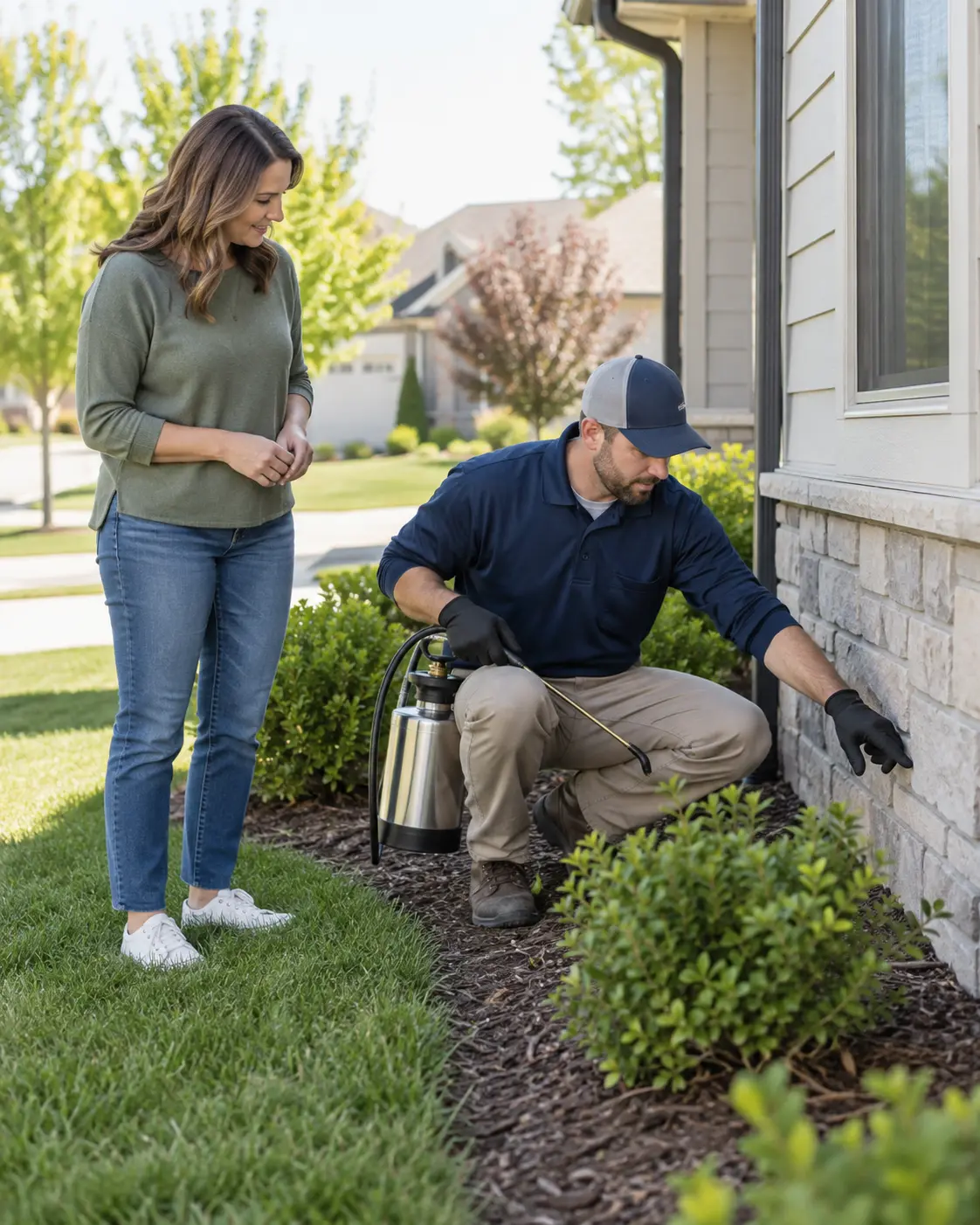
Pest control is a seasonal and recurring business. Homeowners don't think about bugs until they see them — and by then, they're already looking for the fastest solution. Direct mail lets you arrive before that moment, building familiarity and selling prevention so your company is the obvious choice when pests appear.
Seasonal prevention
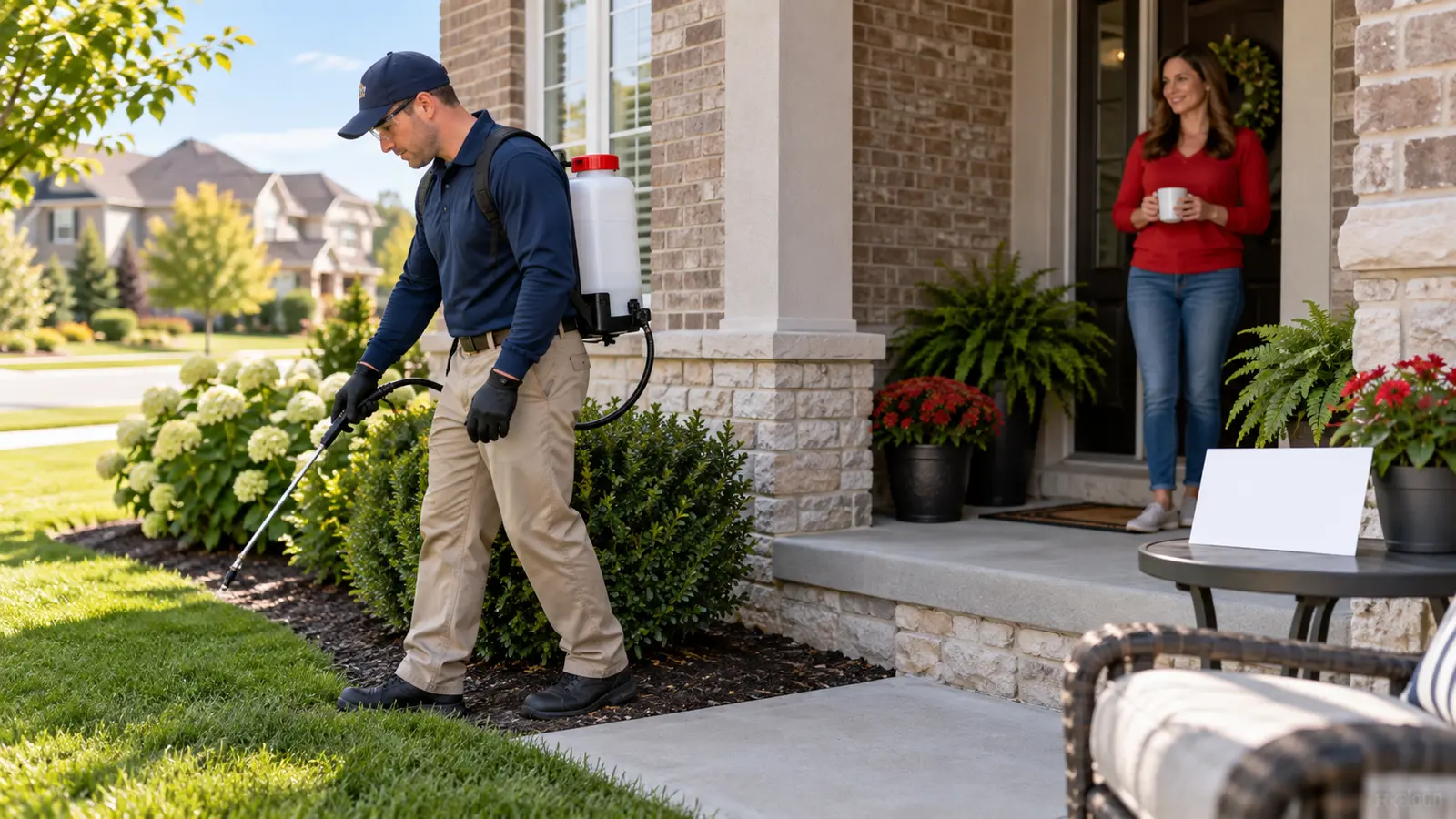
Spring and fall are prime treatment windows. Timed mailers sell prevention before pests become a problem, filling your schedule with planned, recurring work.
Recurring contracts
Quarterly service contracts are the lifeblood of pest control. A postcard with a first-treatment discount is one of the most effective ways to sign new recurring customers.
Pre-season timing
Mailing before pest season peaks — before mosquitoes, ants, or rodents become visible — positions you as the proactive choice, not the emergency responder.
Neighborhood visibility
Pest control is hyperlocal. The company the homeowner already recognizes from a postcard wins the call over an unfamiliar competitor every time.
Three Campaign Ideas
Each campaign is timed to arrive before demand, not after it.
Spring Prevention Campaign
Mail in early spring before pests emerge with a first-treatment discount and recurring service offer. Homeowners are already thinking about yard care — make pest control part of the plan.
Mosquito & Tick Season Campaign
Reach homeowners in late spring with a mosquito and tick control program offer. Yards are where families spend summer — position your service as the way to keep them bite-free.
Fall Rodent Prevention Campaign
Mail before cold weather drives rodents indoors. A fall perimeter treatment offer positions you as the proactive choice to keep pests out before they become a problem.
Targeting the Right Omaha Routes
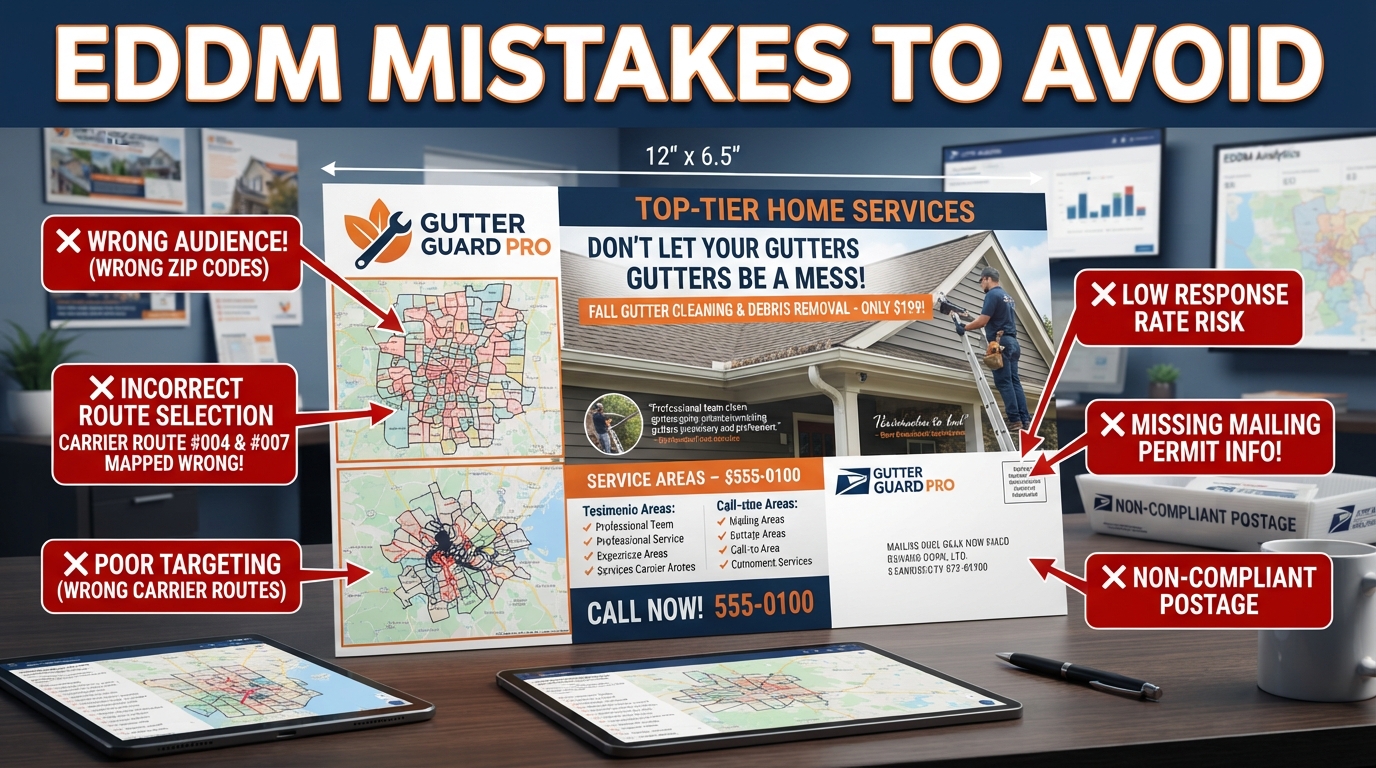
EDDM reaches every door on a carrier route, so the single most important decision is which routes to choose. We help you build a route list around factors that actually matter for pest control:
- Owner-occupied housing — homeowners invest in prevention and recurring contracts, not renters
- Yard-dense neighborhoods — routes with single-family homes and yards are prime for mosquito, tick, and perimeter treatments
- Home age — older homes are more susceptible to rodent and insect entry points
- Previous customer geography — re-mail the neighborhoods where you already have recurring customers
- Route quality — avoid apartment-heavy routes where property management, not residents, handles pest control
You don't mail the whole city.
The right routes beat a big route list every time. A focused mailing to 5,000 well-chosen homes will outperform a sloppy mailing to 20,000. We help you read the route data so you only pay for the homes worth reaching.
Note: we select routes based on available carrier-route data and your service area. We do not claim exact neighborhood demographics, and route composition can change between USPS updates.
Offers & a Three-Touch Sequence
These are examples to spark your campaign — not current EDDM Omaha or client pricing. Test what fits your margins.
Practical offer examples
A recommended three-touch sequence
Spacing three mailings 3–4 weeks apart to the same routes builds familiarity — so homeowners remember you when pests appear. (This is timing logic, not a performance guarantee.)
Before pest season
Lead with a prevention offer and recurring contract discount to sign customers before pests emerge.
2–3 weeks later
Reinforce with a reminder and the same offer code, deepening recognition on the same routes.
Into peak season
Shift to urgency — remind them that pests are active and your team is ready to respond.
The Pest Control Postcard Checklist
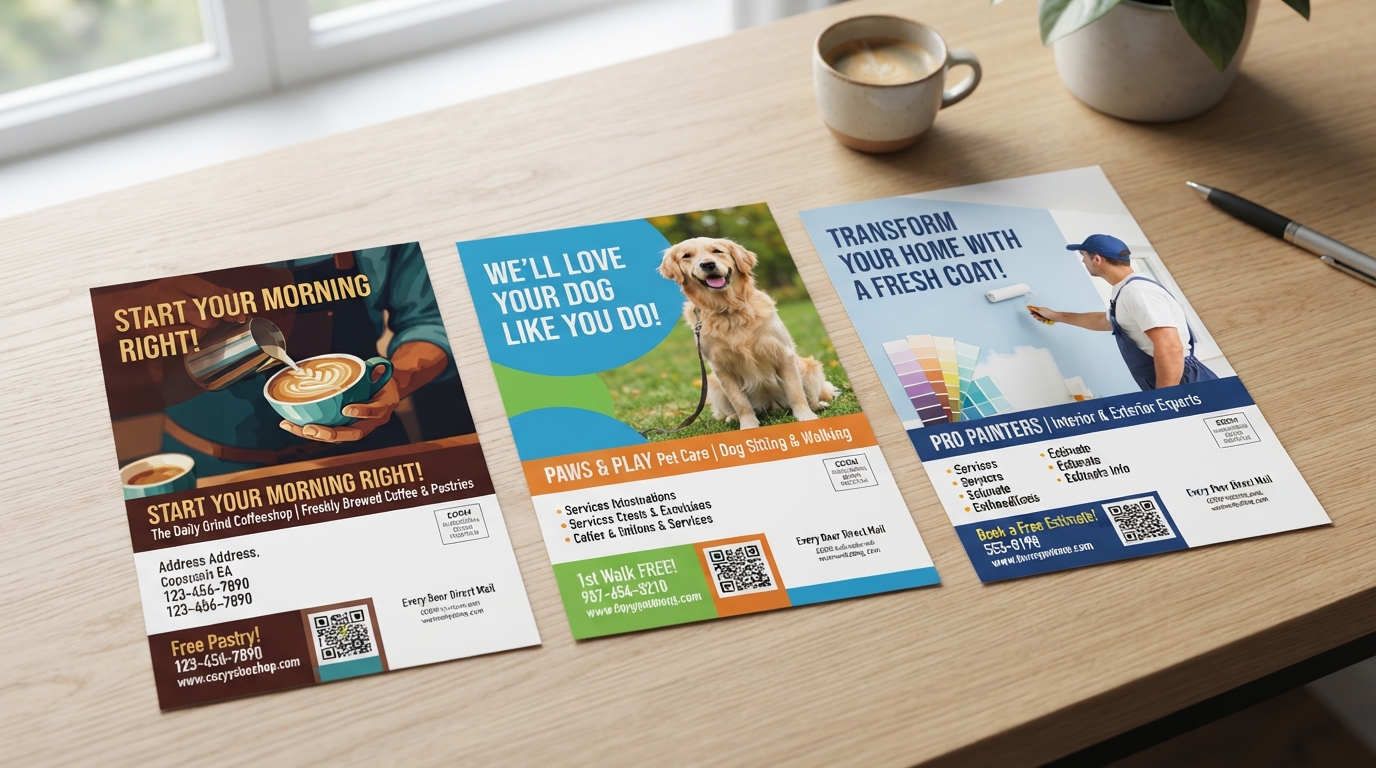
A postcard only has a few seconds to earn a phone call. Make sure yours has every element that turns a glance into a booked service.
- A clear, seasonal headline tied to the current pest threat
- One specific offer — not a list of everything you treat
- Trust signals: license number, pet-safe guarantee, years in business, reviews
- A large, easy-to-read phone number for both emergency and scheduled service
- A QR code linking straight to an online booking or landing page
- A clear distinction between one-time treatments and recurring contracts
- One unmistakable call to action repeated on both sides
How to Track Response
If you can't tell which mailing produced the call, you can't repeat what worked. Every pest control campaign should be measurable:
Call tracking
A unique phone number on the postcard so every inbound call is attributed to that route and drop.
QR scans
A unique QR code linking to a booking or landing page so mobile scans are counted automatically.
New contracts
Match call data against signed recurring contracts to see which routes actually converted, not just which rang.
Seasonal retention
Track contract renewals by route so you can measure which neighborhoods produce long-term recurring revenue.
Why Work With EDDM Omaha
We handle the planning, design, printing, route selection, USPS preparation, mailing coordination, and tracking — so you can focus on the treatments. Whether you bring print-ready artwork or want us to design it, the campaign is built around your offer and your neighborhoods. Whether you bring print-ready artwork or want us to design it, the campaign is built around your offer and your neighborhoods. Learn more about our targeted direct mail services.
Pest Control Direct Mail FAQs
When is the best time to mail pest control postcards in Omaha?
Early spring (March–April) before pests emerge is the strongest window for prevention and recurring contract offers. Late summer and early fall are also effective for mosquito programs and rodent prevention. Mailing before peak season sells prevention, not emergency response.
Should I mail the same neighborhoods more than once?
Yes. A three-touch sequence spaced 3–4 weeks apart builds familiarity so homeowners remember you when pests appear. Re-mailing the same quality routes is how most pest control companies build dense clusters of recurring customers.
What postcard size works best for pest control?
Oversized EDDM sizes like 6.5" × 9" and 6" × 11" stand out in the mailbox and give room for a clear headline, offer, and call number. Larger formats like 8.5" × 11" work well when you want to feature a full service menu or seasonal program details.
How do I target homeowners instead of renters?
Every Door Direct Mail reaches entire carrier routes. We help you select routes with a high concentration of owner-occupied, single-family homes based on available route data, and we avoid apartment-heavy routes where property management, not residents, handles pest control.
Can direct mail drive emergency pest calls?
It can. A postcard kept on the counter is exactly what a homeowner reaches for when they see a mouse or a wasp nest. A clear emergency message and phone number keep you top-of-mind for urgent calls.
How do I know if my pest control postcard campaign worked?
Use a call-tracking number, a unique QR code, and a specific offer code so you can attribute phone calls, QR scans, and signed contracts back to the mailing. We set up tracking so you can see which routes generate recurring customers.
Do I need print-ready artwork, or can you design the postcard?
Either works. If you have print-ready artwork we will prep and mail it. If not, our team designs a pest-control-specific postcard around your offer, brand, and target neighborhoods as part of a full-service campaign.
How many homes should a pest control company mail to?
Most Omaha pest control companies start with 5,000 homes within their service radius and expand from there. The exact number is set by the carrier routes you select, and you only pay for the homes you actually mail to.
Pest Control Direct Mail Insights
 Industry
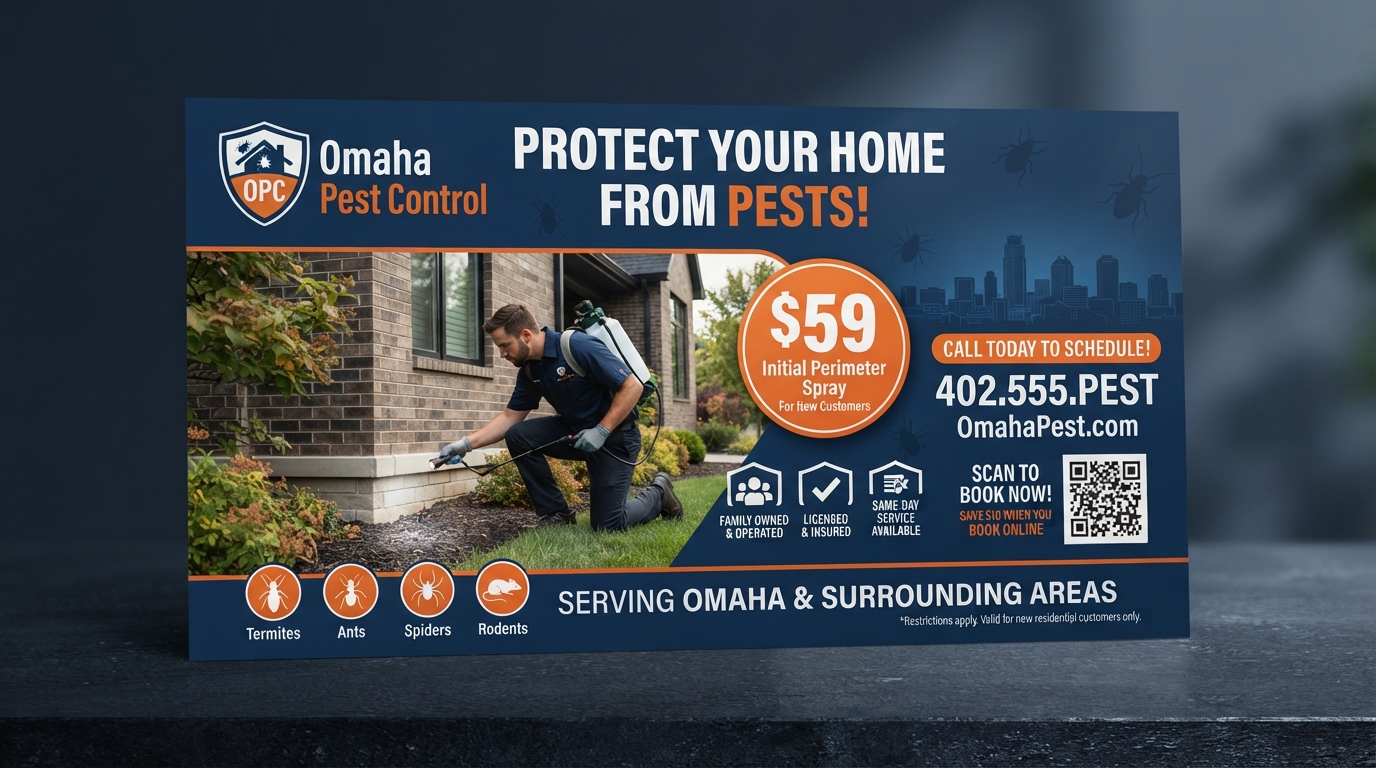
Direct Mail Campaigns for Omaha Pest Control Services: A Step-by-Step Guide
 Industry
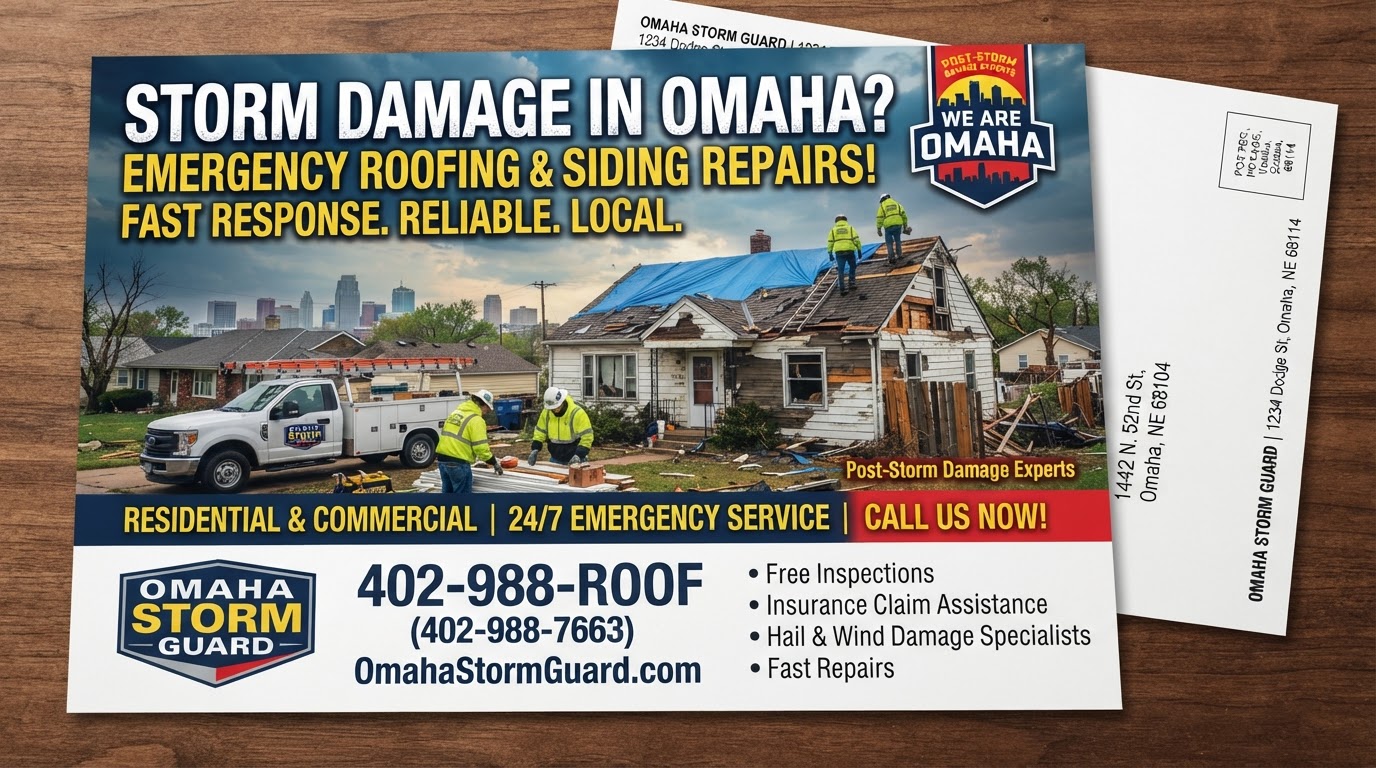
Leveraging Direct Mail for Urgent Home Service Needs & Post-Storm Restoration
 Marketing
Tracking & Measuring EDDM Success: Metrics You Need to Know
Direct Mail Guides

Ready to Build Recurring Customers Before Pest Season?
Get a free Omaha EDDM plan built around your service radius, seasonal timing, and recurring contract offer. We'll map the routes, design the postcard, and handle the mailing — you take the calls.
